By Jasmine Ong
It’s no surprise that women can do it all. Since the struggles for equality in an old patriarchal society, women have strived to overcome the constant challenges that come our way, consistently pushing boundaries and setting new examples of just what our gender is capable of.
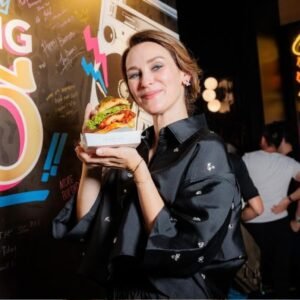
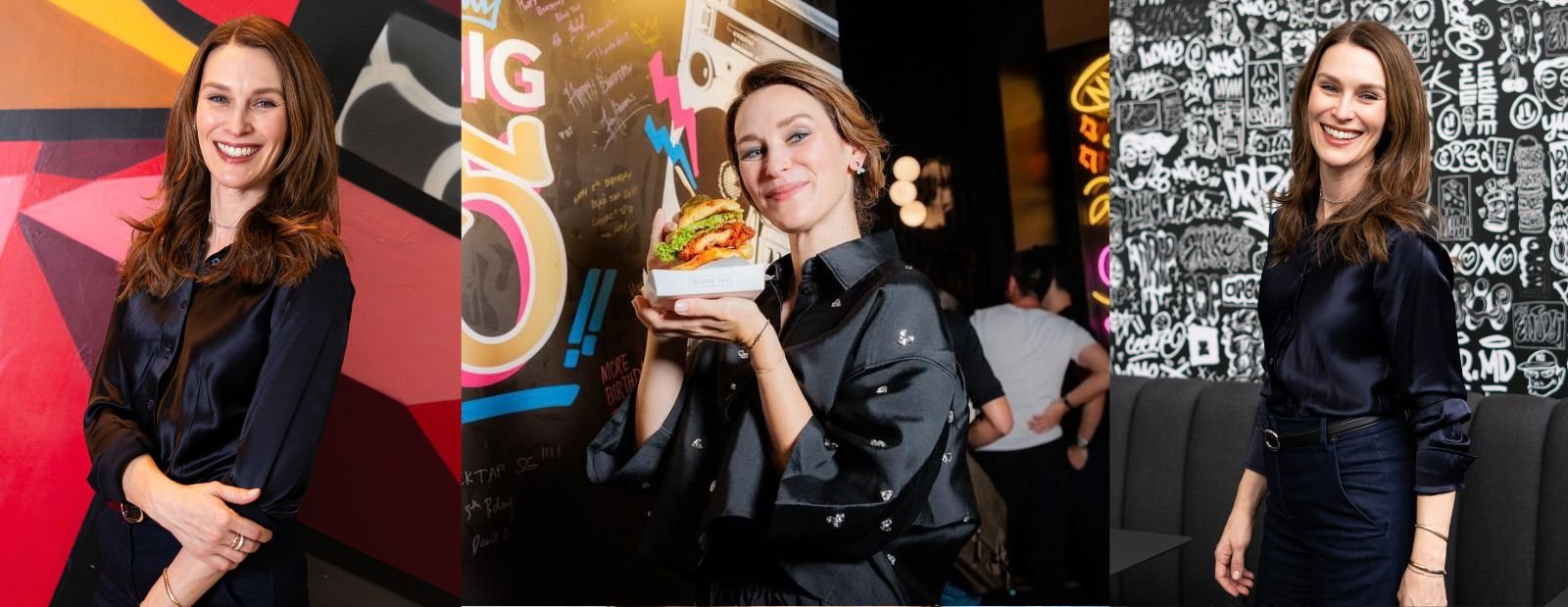
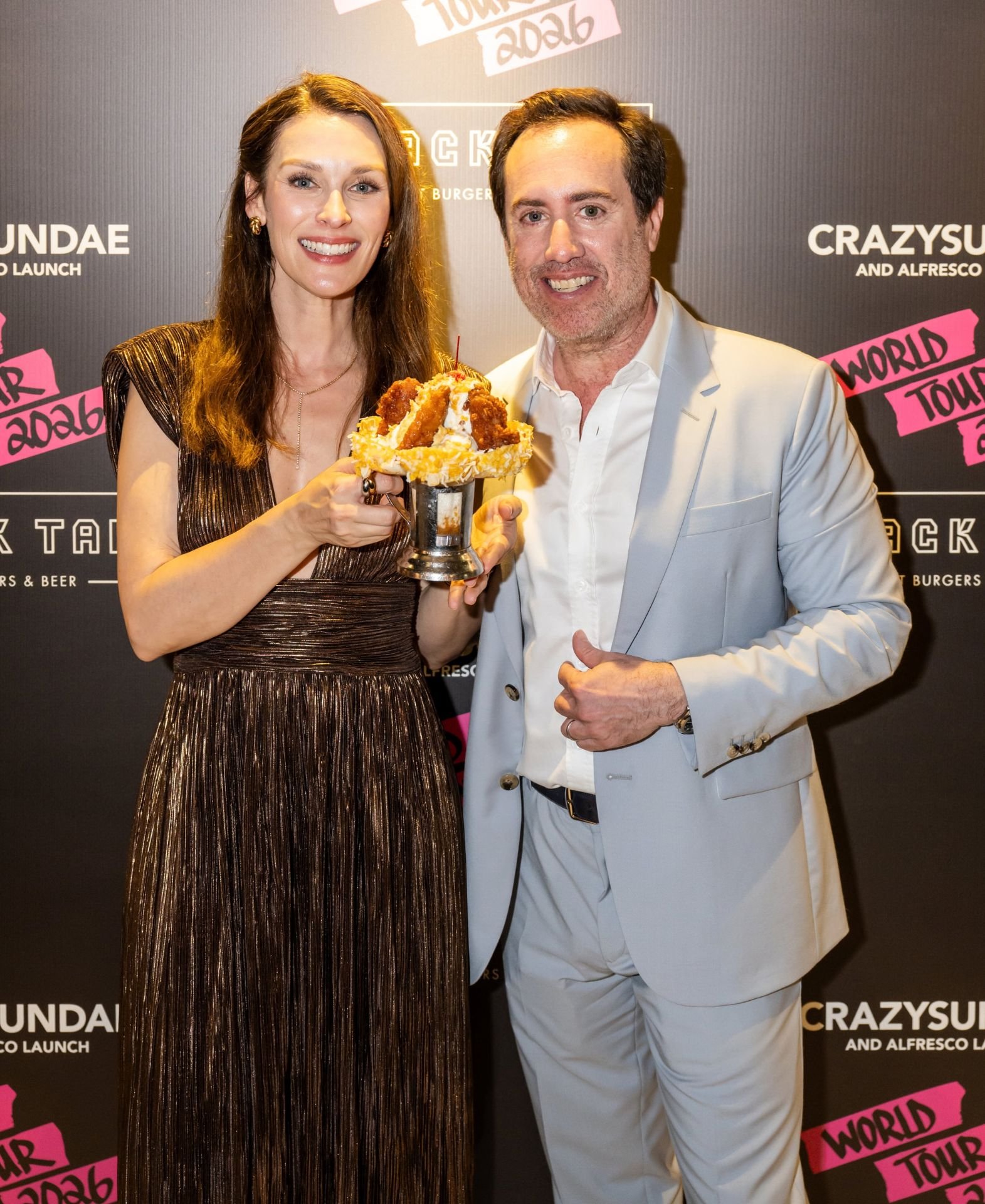
To celebrate this International Women’s Day, we spoke with Julie Mulligan Barish, the Co-Founder and CEO of Black Tap Craft Burgers & Beer, who was recently in town to debut the World-First CrazySundae at her restaurant in Marina Bay Sands.
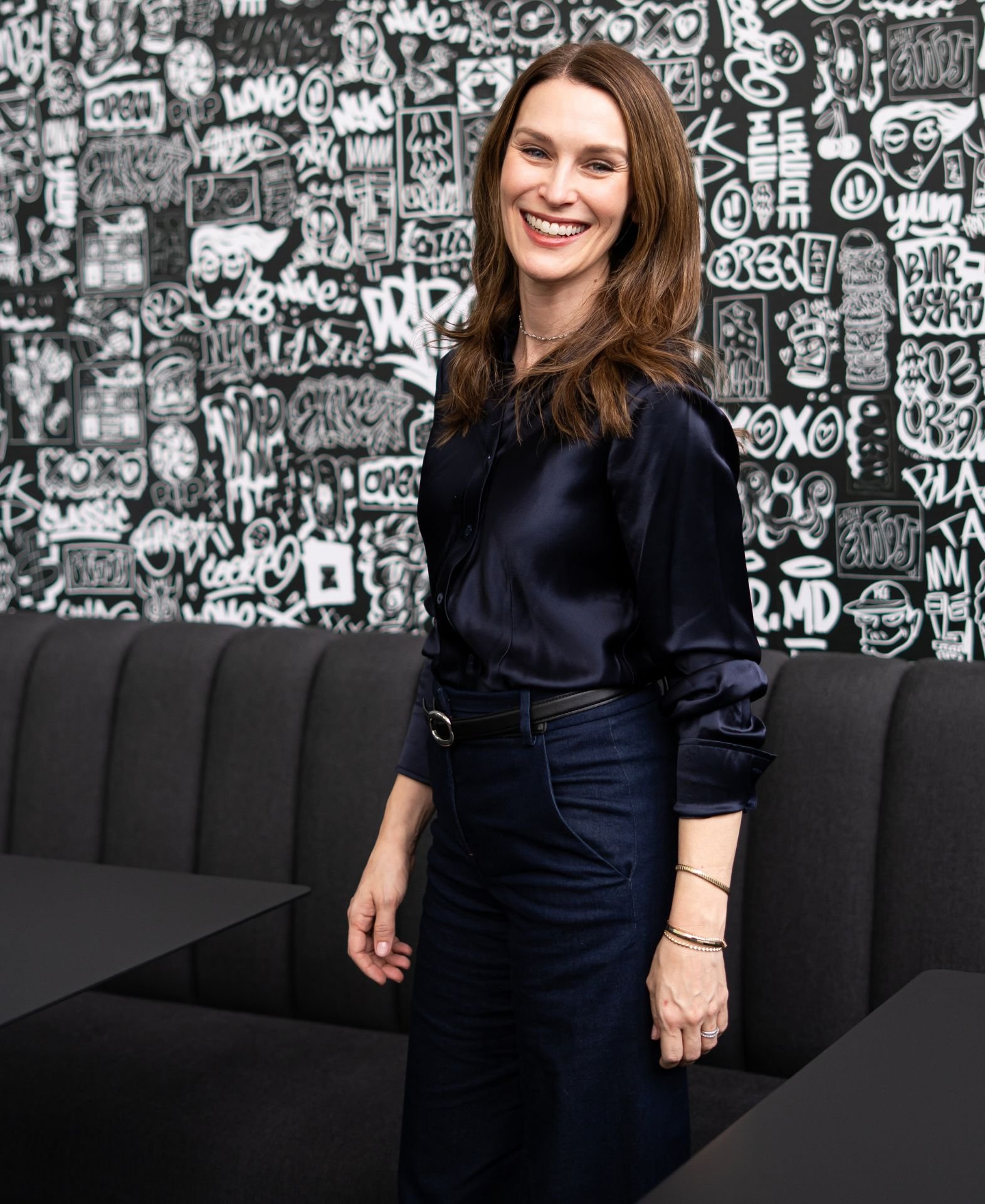
What most people may not know about Julie is that she, in addition to wearing her girl boss hat as a famous restauranteur, is also an architect by trade and a loving mother to two daughters.
Despite constantly being pulled in different directions because of her varying roles, Julie is an empowering example of the working women of today, who is not only able to juggle between family and work life, but is also able to do it with such grace and finesse.
Hi Julie! Can you give us a little bit of a background on how you grew up and what led you to pursue an education in architecture?
Julie Mulligan Barish: “I grew up in New York City, and from a young age, I have been inspired by my surroundings. I loved walking through the city and admiring everything, from the skyline and historic buildings to looking at restaurants and public spaces. I remember visiting Grand Central Terminal and staring up at the ceiling mural, completely captivated. Those everyday moments made me appreciate design and its power in shaping the way people experience a city.
In school, I enjoyed and excelled in both mathematics and art. Architecture felt like the perfect intersection of the two. It allowed me to blend creativity with problem‑solving, and that combination ultimately led me to pursue architecture.”
What led to the decision to pivot from architecture to F&B?
Julie: “I began my career in architecture working on hotels, residential developments, mixed‑use projects, and even a university project. Funny enough, an incident on that university project forced everything to pause – and that unexpected downtime opened the door to something new.
During that period, I started supporting a few F&B design projects, and I immediately felt the difference. These spaces had to stand up to constant wear and tear, but they also allowed for so much more creativity compared to the institutional work I had been doing. What really drew me in was the full-circle nature of the experience: seeing people enjoy the space, observing how it held up, and understanding how design influenced the way they interacted with it. I felt that it was rewarding.
I’ve always loved dining out and discovering new restaurants, so stepping into the F&B industry felt natural. The projects were more fast‑paced, more public-facing, and the level of creativity challenged me in good ways. Over time, it just became clear that this was the direction I was meant to move toward.
And then, when I met my now husband and partner, Chris, everything clicked even further…”

What were some of the most memorable challenges you faced when you first started building your F&B business, and how did you overcome it?
Julie: “In the early days, there were a lot of those moments. When we opened in SoHo, we were in an old building, and one night the wall between our space and our neighbour’s gave way. It was one of those things you never expect to deal with, but we somehow managed to rebuild an entirely new wall without shutting down. Although it was stressful, it showed me how to adapt quickly in this business.
Our first Midtown location had its own challenge with the budget. Every design choice had to be super intentional. While it wasn’t easy, it taught me how to be creative within constraints.
Opening in Singapore was a whole different adventure. The project needed a lot of hands‑on involvement so I flew to Singapore once a month for five months. Each for up to six days or sometimes just a quick three‑day trip. This was back when there were no direct flights and no Wi‑Fi, so I was working offline on the go for a significant amount of time.
For the space, we had to be creative to ensure the restaurant feels cohesive between the atrium and indoor area. Singapore became the first project we basically designed over WhatsApp and with the time difference, it was an added layer of challenge.
Looking back, those moments taught me how to stay flexible, how to solve problems on the go, and how to navigate the chaos when absolutely nothing goes the way you expected.”
Growing up, who were your female role models?
Julie: “One of the most influential women in my life was my dear childhood friend’s mother, Trish Hagood. She had this incredible belief that you can learn anything in two weeks, and it became a guiding mantra for me.
Her advice shaped the way I approach challenges: start by understanding what you know, be honest about what you don’t, and remember that a lack of knowledge isn’t a limitation. Instead, it’s an invitation to grow. Because of her, I’ve never hesitated to learn new skills, adapt quickly, or dive in head first to figure things out on my own rather than waiting for others to show me the way.
Trish was an entrepreneur and business owner for most of her life, moving through the world with such independence and resilience. With the right intention and consistent effort, we can always close the gap between where we are and where we want to be.”
What were some life lessons, that have stayed with you, that you hope to impart to your children?
Julie: “One life lesson I always come back to is this idea of keeping “one foot in the library and one foot in the street”. I want my kids to value traditional education, but also to pay attention to the world around them. I believe it is important to stay curious, be observant and learn from real life experiences just as much as from books.
Another big one is that life rarely goes according to plan. In fact, it usually goes in every direction except the one that you expect. I hope they learn to embrace change, stay flexible, and still stay true to who they are. Staying open‑minded and recognising that we always have something to learn from one another has been a guiding principle for me.
And finally, I really believe great food is worth pursuing. It can take you to incredible places and opens a door for you to connect with people.”
You’re a mom, a wife and a boss — how do you juggle between family life and the demands of running several restaurants?
Julie: “Juggling family and running restaurants feels quite similar – nothing is ever fully done and you’re constantly shifting between things. It’s a real balancing act, but I’ve learned that the only way to make it work is to have a strong support system both at home and at work.
I’m incredibly lucky to have a great team I can rely on in the restaurants, and a husband who supports me and shares the same vision whether we’re talking about business or family. That alignment makes everything feel like an ecosystem that we’re building together.
Our daughter Bee has also grown up around the business, and she genuinely enjoys it. I learn so much from seeing things through her lens – what she thinks is cool and what she is curious about. Kids are great at reminding you of what really matters.
At the end of the day, I try to be clear on my priorities so I’m not just running around putting out whatever the latest fire is. It’s never perfect, but with the right people around you, you will find your rhythm.”
It is not easy to take on the role as a working mom. What are some things that you’ve learned that that helped with the transition?
Julie: “I feel fortunate that my position gives me some flexibility. It has allowed me to witness their milestones, even while juggling a lot professionally.
I think having multiple roles actually makes me a better mom. Being able to pour myself into work and then into family, gives me balance and keeps me grounded, even if managing both isn’t always easy. The two parts of my life really do complement each other.”
As we celebrate International Women’s Day on 8 March, what advice would you give to the next generation of women?
Julie: “Be confident, don’t be afraid to take up space and surround yourself with women who lift you up. Find the ones who challenge you, inspire you, and celebrate your wins as if they’re their own.”