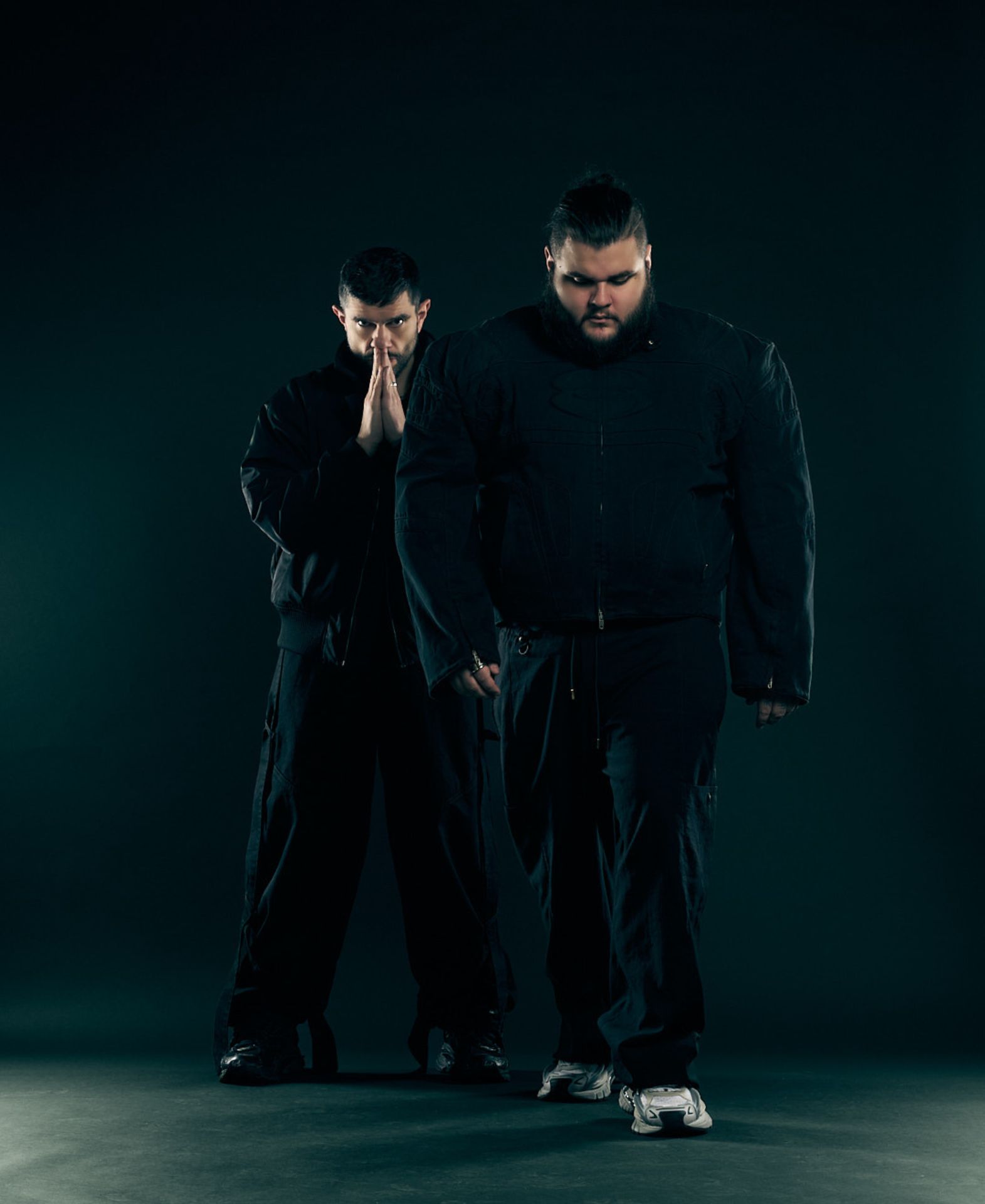
Known for their signature Melodic Tecno style that defines technical precision and emotional power, Mathame exploded onto the scene with tracks like ‘Nothing Around Us’ and the powerful Camelphat collaboration ‘Believe’, that quickly made them global fixtures.
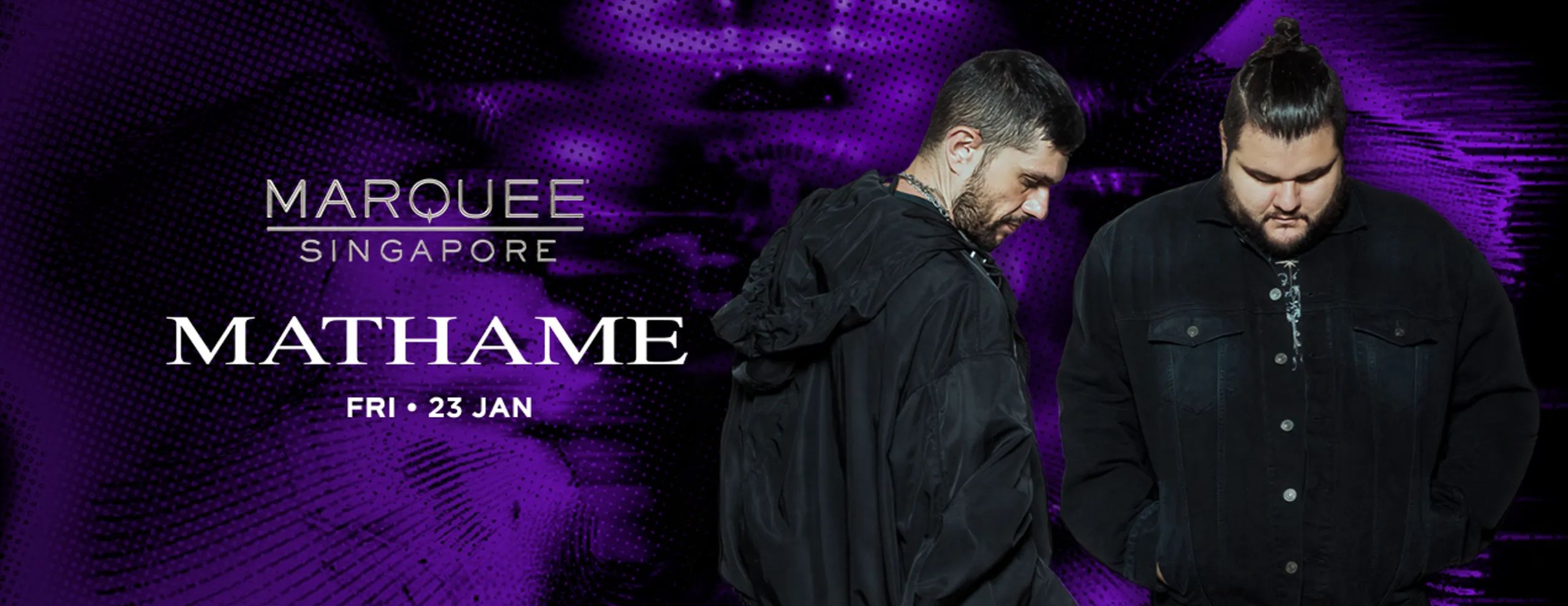
The duo have since gone on to deliver high-impact, cinematic sound to iconic festivals like Tomorrowland, Awakenings, Verknipt, and familiar venues that will soon include Marquee in Singapore this Friday, 23 January. Ahead of their set here, we caught up with the brothers to understand more about their artistry and their sound.

Matteo, with your background in film, you’ve often treated your sets as “expanded cinema.”
For your upcoming show at Marquee Singapore on 23 Jan, how does the architecture of that specific venue—with its massive scale and iconic Big Wheel—influence the “storyboard” of your set compared to an open-air festival like Tomorrowland?
Mathame: “The fact that we can rely on an advanced level of technical devices allows us to design content specifically for each venue. We often do this, very consciously, to give people an additional layer of emotion and memory. Because ultimately, that’s what matters most: leaving something behind in those who come to listen to us.”
The “Mathame sound” was famously forged in the isolation of Mt. Etna. Now that you are constantly surrounded by the noise of global cities and digital connectivity, how do you artificially recreate that sense of “volcanic solitude” to ensure your new productions maintain that raw, desolate emotional core?
Mathame: “It’s an isolationist feeling that still defines us today. We often feel like a monad, with trajectories, goals, and thoughts very different from the “standard” touring DJ or electronic musician. We feel alien, and we have since the beginning. This reflects directly in our productions: the voice of the volcano resonates like a heartbeat. It’s the power we try to reproduce in our music and in our shows.”
You’ve coined your sound “emo-tech.” As we move closer to a world where AI can mimic human sentiment, where do you believe the “uncanny valley” lies in melodic techno?
Is there a specific type of “musical imperfection” that you intentionally keep in your tracks to prove a human heart is still beating behind the machines?
Mathame: “We don’t believe that “human imperfection” is the right path, simply because it is itself a framework, since perfection doesn’t exist except in relation to a paradigm. And today, the paradigm has shifted.
We believe that those who create music, and who have the privilege and responsibility of performing in front of people from all over the world, must offer constantly new emotions, originality, and memories. Even if the tools come from technology or AI, that’s fine. It is still the human who creates; AI still executes, and will continue to do so for a very long time. It is intention that makes gestures human.”
Your recent work with NEOLOGY suggests a move toward “non-linear storytelling.” In a club environment where the audience is physically moving in loops, how do you bring together a linear narrative (like a film) with the circular, repetitive nature of dance music?
Mathame: “We believe the key lies in the technical organization of the language of the bridge and the drop. We’re developing proprietary software to enable this. It’s a field of research: dance music expanding into cinema, and cinema expanding into dance.”

There is a 12-year age gap between you two. In terms of musical “archaeology,” how do your different generational entry points—Matteo’s 90s hip-hop/italo-disco roots vs. Amedeo’s digital-native upbringing—create a friction that actually benefits the final Mathame sound?
Mathame: “It’s necessary for the coexistence of form. Influences and mythology survive through what is passed down, but they must be infused with the accelerationist vein of these digital years. It’s the only way to communicate, to understand, and to identify where the contemporary classic lies, and where the classic of the future will be.”
The “NEO” statue—a 9-meter tall meditating cyborg—has become your third member. If that cyborg could “hear” the crowd’s emotions rather than just the music, what specific emotion do you think it would detect as the most prevalent during a Mathame set in 2026?
Mathame: “There are three distinct emotional phases in our NEO shows. The first is tension, fearful, grounded, harsh, fast. The second is awareness, consolidation, security, hypnosis. The third is release, lightness, detachment, and emotional travel.”

You’ve mentioned being “tired” of LED walls and wanting to return to “physicality and light.” For the Singapore audience, who are used to high-tech visual spectacles, how do you plan to use absence or silence as a tool to create intensity during your performance?
Mathame: “‘Absence is punctuation — nothing is ever truly ‘absent.’ We’re not tired of the LED wall as a technology, but of how it’s used. The same visual languages, the same solutions. In many shows we’ve seen, it becomes boring, redundant, repetitive. The LED wall is an extremely powerful device, but it has to be used intelligently.”
Your “Angel Alphabet” project explored the idea of myths within the Metaverse. If you had to “encode” one secret message into the frequencies of your Singapore set that would only be understood by the listeners’ subconscious, what would that message be?
Mathame: “I see if I believe.”
Mathame will be performing at Marquee Singapore on 23 January 2026. Tickets are available from $20 online here.